


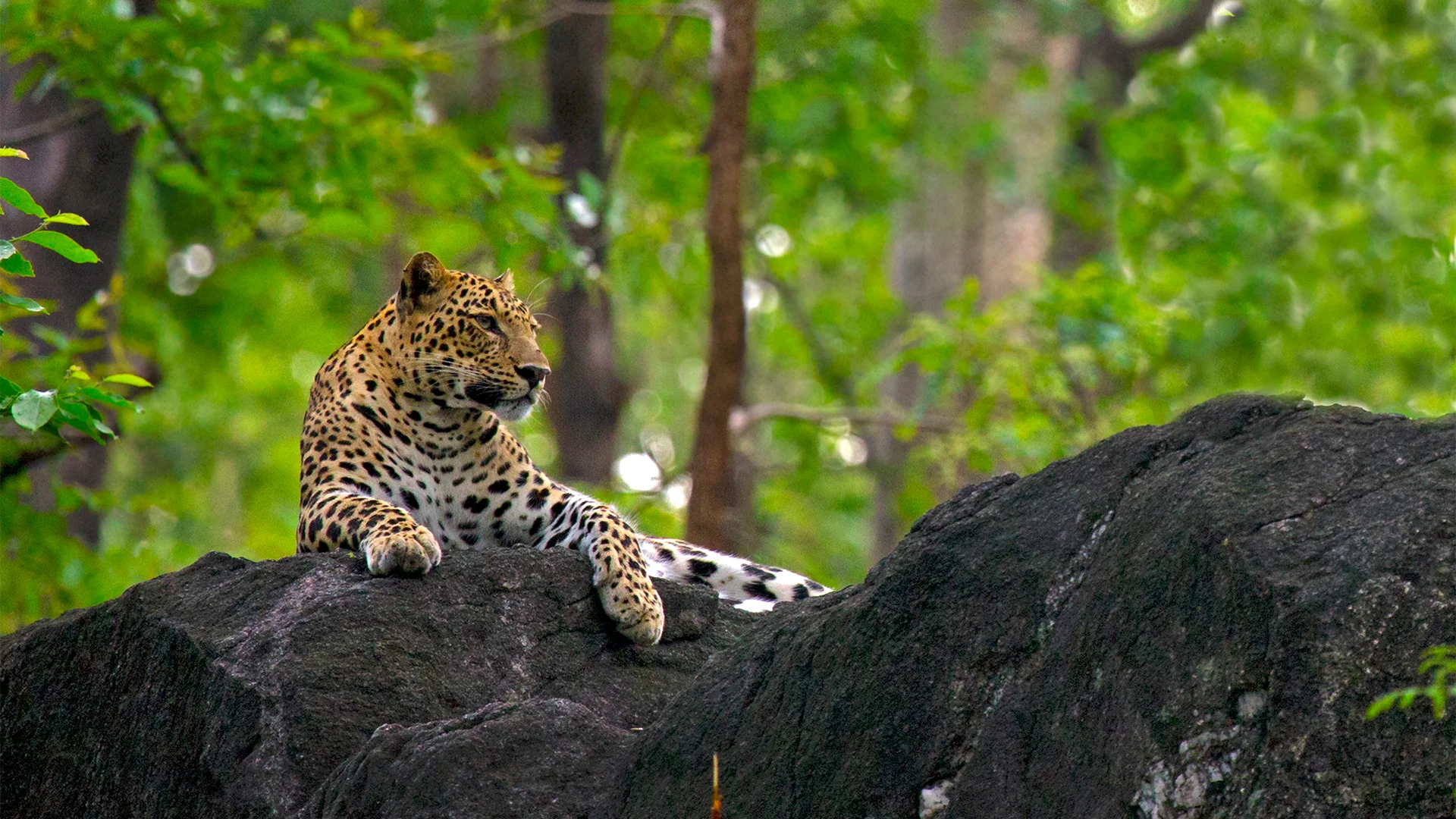
October to November: The Forest Awakens After Monsoon
Pench usually reopens for safaris in early to mid-October, once the monsoon withdraws. This period feels magical. The forest is lush, grasslands are bright green, and streams still carry fresh water. For photographers, the scenery is at its most beautiful.
However, when it comes strictly to tiger and leopard sightings, this period can be unpredictable. With water available everywhere, animals do not need to stick to known waterholes or forest tracks. Tigers tend to move deeper inside their territories, and sightings may require patience and multiple safaris.
Leopards during this season are often easier to spot than tigers, especially in buffer areas and rocky zones. The fresh vegetation also supports healthy herbivore movement, which indirectly keeps predators active. If your travel goal combines scenery, fewer crowds, and a chance encounter with wildlife, October and November are rewarding months.
December to January: Crisp Mornings and Balanced Sightings
Winter in Pench brings cooler temperatures and a noticeable change in animal behavior. Morning safaris can be cold, especially in open gypsy vehicles, but this season offers a balanced mix of comfort and wildlife movement.
Tigers are active during daylight hours as they patrol territories and hunt prey that now prefers open sunlit patches. Leopards often use forest tracks in the early morning before human activity increases. Sightings during this period are steady, though not at their peak.
December and January are also popular with families and first-time safari travelers. If you are combining Pench with a broader Central India itinerary such as a multi-park journey covering Kanha and Bandhavgarh, this season works well with packages like the classic Delhi to Pench, Kanha, and Bandhavgarh tiger circuit.
February to March: The Sweet Spot for Big Cat Sightings
Many experienced wildlife trackers consider late winter and early summer the best time to visit Pench for tiger and leopard sightings. By February, the forest begins to dry slowly. Grass thins out, water sources reduce, and animal movement becomes more predictable.
Tigers are often seen using forest roads, water bodies, and open meadows during both morning and evening safaris. Cubs, if present, are more visible as mothers bring them closer to water. Leopards also start appearing more frequently near tracks and rocky outcrops.
February offers a strong balance. The heat is manageable, visibility improves, and the forest still retains some greenery. For travelers planning a focused tiger experience without extreme temperatures, this period is highly recommended.
April to May: Peak Season for Tiger Sightings
If your primary goal is to maximize your chances of seeing tigers and leopards, April and May are the most rewarding months in Pench. Summer is harsh, but wildlife behavior works in the visitor’s favor.
As temperatures rise, water becomes scarce. Tigers and leopards are compelled to visit remaining waterholes regularly. Sightings near ponds, nullahs, and shaded forest stretches become frequent. Tigers are often seen resting near water during mid-morning safaris or crossing tracks in search of shade.
Leopards, usually elusive, also increase their daytime movement during peak summer. Their habit of using rocky shelters and large trees makes them easier to spot in dry conditions when foliage is sparse.
This is also the ideal time for travelers combining Pench with other high-performing reserves such as Tadoba. Many wildlife enthusiasts choose curated itineraries like the Tadoba and Pench safari experience to improve overall sighting probability.
Morning vs Evening Safaris: Does Timing Matter?
In Pench, both morning and evening safaris offer strong chances, but seasonal differences matter. Morning safaris are generally better in winter and early summer, when big cats are active after cooler nights. Tigers often patrol territory lines at dawn, increasing chances of sightings along forest roads.
Evening safaris perform better in peak summer. As the day cools slightly, tigers and leopards move toward waterholes and shaded zones. Light conditions during late afternoon also help photographers capture dramatic images.
For serious wildlife travelers, booking multiple safaris across different time slots increases success far more than choosing a single “perfect” safari.
Pench Core Zones vs Buffer Zones
Pench is divided into core zones and buffer areas, each offering a distinct experience. Core zones usually have stricter access but higher tiger density. Buffer zones, on the other hand, often surprise visitors with leopard sightings and quieter forest drives.
Leopards, in particular, adapt well to buffer landscapes. Many memorable leopard sightings in Pench happen in buffer areas where fewer vehicles operate. During summer, even buffer safaris can deliver excellent tiger encounters.
Travelers looking for a mix of wildlife and cultural context sometimes combine Pench with broader itineraries such as Central India tiger safaris paired with heritage destinations.
Weekends vs Weekdays: Crowd Factor
Another overlooked factor in planning the best time to visit Pench is crowd density. Weekends and holidays tend to attract more visitors, especially between December and March. Increased vehicle movement can sometimes disturb animal behavior.
Weekday safaris often feel calmer and more immersive. Guides can spend more time tracking pugmarks and alarm calls without pressure from traffic. If possible, plan your Pench visit mid-week for a more relaxed experience.
Short-duration travelers often opt for wildlife weekend escapes, while longer stays allow for deeper exploration and higher sighting odds.
Combining Pench With Other Tiger Reserves
While Pench alone offers rewarding sightings, combining it with nearby reserves significantly improves overall success. Central India is uniquely positioned for multi-park wildlife circuits.
Many travelers extend their journey with Kanha, Bandhavgarh, or Tadoba, creating a varied safari experience across different forest types. Curated India tiger safari tours are designed around seasonal performance of each park.
For those seeking comfort and exclusivity during peak months, premium accommodations and personalized safaris are available through luxury wildlife safari experiences.
Leopard Sightings: What Makes Pench Special?
Pench is one of the few tiger reserves where leopard sightings remain consistently strong despite a healthy tiger population. The landscape provides ample rocky shelters and prey diversity, allowing leopards to coexist.
Summer and late winter remain the best periods for leopard sightings. Early morning safaris in buffer zones often yield the best results. Unlike tigers, leopards may appear suddenly and vanish just as quickly, making every sighting special.
Best Time Summary: Month-by-Month Snapshot
October to November offers beautiful forests and moderate sightings. December and January provide balanced conditions with steady wildlife movement. February and March are excellent for both tigers and leopards with comfortable weather. April and May deliver the highest sighting probability, especially near waterholes, despite intense heat.
Your ideal travel window depends on whether you prioritize comfort, photography, or raw wildlife encounters. Pench rewards patience, planning, and multiple safaris more than any single “perfect” month.
Final Thoughts on Planning Your Pench Safari
The best time to visit Pench for tiger and leopard sightings is ultimately a combination of season, safari timing, and travel strategy. While summer delivers dramatic encounters, winter and early spring offer a richer overall forest experience.
Whether you are choosing a focused Pench journey or a broader itinerary blending wildlife and culture through wildlife and cultural travel experiences, Pench remains one of Central India’s most rewarding reserves for big cat lovers.
