


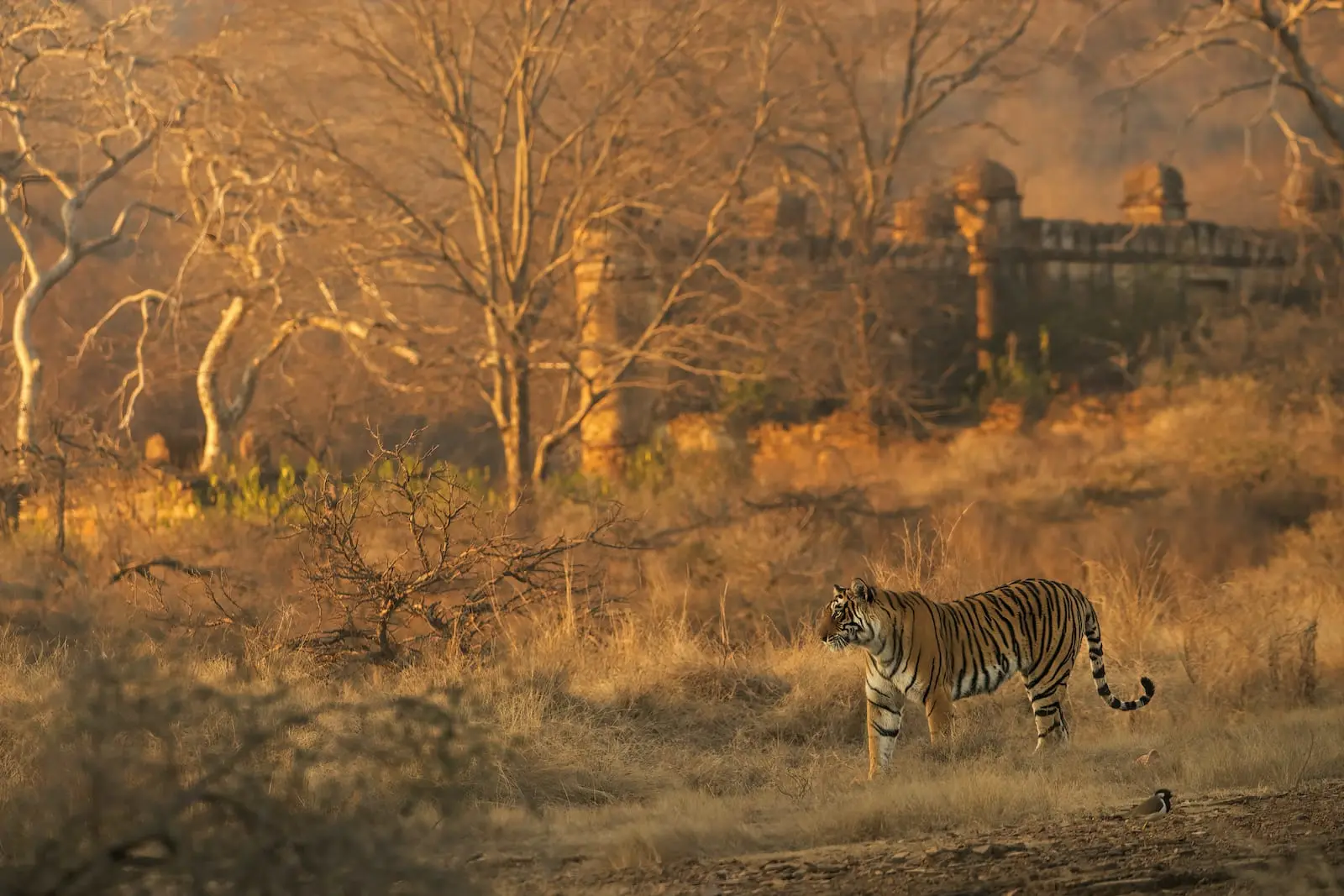
Most people start planning Ranthambore with one simple picture in their head: an open jeep rolling through dry forest, a lake flashing in the morning light, and (hopefully) a tiger stepping out like it owns the place. Then they try to book a safari, and suddenly it feels like they’ve walked into a pricing maze: per-seat vs full vehicle, “zones” vs “routes,” canter vs gypsy, advance quota vs tatkal, Indian vs foreigner rates, plus gate IDs and document rules.
If you’re feeling that confusion right now, you’re not alone. Ranthambore’s safari pricing isn’t hard because it’s a scam or because there’s some secret trick. It’s hard because it’s a mix of government-controlled permits and regulated vehicles, and the wording online is often sloppy. One website says “permit included,” another says “guide included,” and a third shows a price that only makes sense if you already know what a “seat” means in Ranthambore.
This guide is written for travelers who want a straight, practical answer to: How much does a Ranthambore safari cost? Not in one line, but in a way that helps you budget and book without last-minute surprises. I’ll explain the cost structure, what you’re actually paying for, how the different booking quotas change prices, and what a realistic total looks like for couples, families, and solo travelers.
Along the way, if you want broader context, it helps to read a detailed overview of how tiger safaris work across India and why pricing varies park to park, because Ranthambore plays by a few rules that feel different from many Madhya Pradesh reserves.
First, the two safari types that decide your budget: Gypsy vs Canter
In Ranthambore, most tourists enter the park in one of two vehicles:
Gypsy (open jeep, 6 seats) — this is what most people imagine as a “jeep safari.” Smaller group, more flexible photography angles, easier to move and stop without blocking a bigger vehicle.
Canter (open bus, ~20 seats) — a larger shared vehicle. It’s often cheaper per person and easier to get for popular dates, but it’s also a different experience: more people, less flexibility, and you’re not in control of who sits where.
Here’s the key point that clears up a lot of confusion: Ranthambore pricing is commonly displayed per seat, especially for gypsy bookings. That does not mean you are sharing a jeep with strangers by default (though you can). It means the system treats the jeep as 6 “seats,” and the cost is calculated seat-wise unless you book the full vehicle.
Some portals and operators list recent seat prices around ₹2,050 per seat for Indian nationals and ₹5,000 per seat for foreign nationals for gypsy safaris, presented as “updated” pricing for 2026 by certain booking sites. Other sources list different per-seat numbers depending on how they bundle guide/vehicle/fees, which is exactly why you should use ranges and always cross-check at booking time.
For canter, you’ll see per-person prices commonly listed around ₹1,400 per person (Indian) and ₹3,500 per person (foreigner) on some Ranthambore-focused booking pages. The exact figure can vary by season and quota, but the pattern remains: canter is usually cheaper per head than a gypsy seat.
Now let’s translate those “seat prices” into something you can actually plan with.
What your safari fee usually includes (and what it doesn’t)
In many parks, you pay separate line items: entry fee, vehicle fee, guide fee, permit fee, camera fee. Ranthambore is a bit different because a lot of listings you see online are already “bundled” into a single per-seat number, especially in shared gypsy/canter bookings.
Typically, the base safari price (the one you see when selecting a date/zone/shift) covers the permit plus the vehicle and guide allocation for that seat. That’s why seat prices look higher than you might expect if you’re comparing with reserves where the permit is separate and the jeep rental is separate.
But there are still costs that often sit outside that number:
- Hotel and transfers (Sawai Madhopur station pickup, Jaipur transfer, etc.)
- Camera fees in some cases (rules can change; always verify for long lenses)
- Park fee differences for special quotas (tatkal/premium/last-minute systems)
- Naturalist services (different from the mandatory guide; some resorts provide a trained naturalist who can accompany you outside the park or help interpret sightings, but they won’t replace the official guide inside)
- Optional experiences (fort visit, village walk, birding, etc.)
So when someone asks, “How much does a Ranthambore safari cost?” the honest answer is: the safari seat itself is one piece, and your trip cost is the whole puzzle. Let’s build the safari piece first, because that’s what you’re here for.
Shared gypsy vs full gypsy: the difference that changes everything
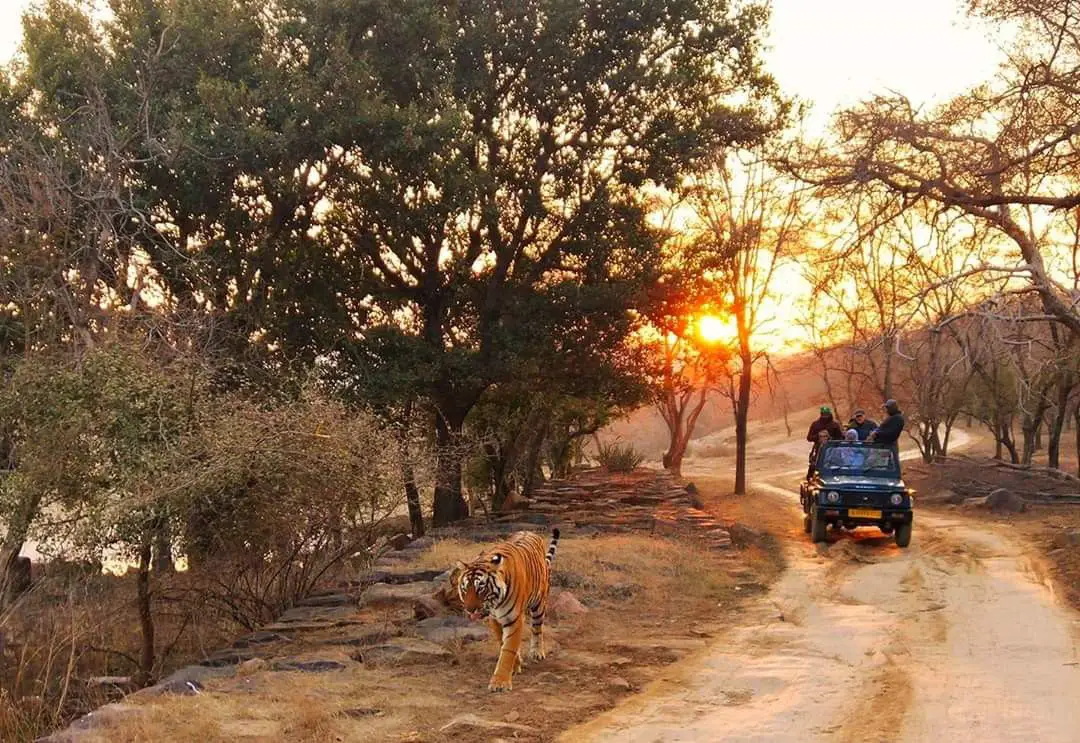
If you’re two people traveling together, the “per seat” system can either be your friend or your enemy.
Shared gypsy booking: You book 1–5 seats in a 6-seater gypsy. You pay per person. The remaining seats can be filled by other travelers. This is usually the most budget-friendly way to get a gypsy experience if you’re not a full group.
Full gypsy booking (private jeep): You pay for all 6 seats, even if you’re only two people. You get the whole vehicle to yourself. It’s quieter, easier for photographers, and honestly more comfortable because you can spread out your gear and you don’t have the awkward “who is sitting where” moment at the gate.
Here’s what that looks like in rough numbers using commonly listed per-seat rates:
If Indian nationals are seeing around ₹2,050 per seat, two people in a shared gypsy might spend roughly ₹4,100 for that safari seat cost.
But if you want a full gypsy, you’d multiply by 6 seats, which lands around ₹12,300 for the same slot. That’s why private jeeps feel “expensive” in Ranthambore: you’re not paying extra fees; you’re paying empty seats.
For foreign nationals, the gap can be even more dramatic because per-seat rates are higher. At around ₹5,000 per seat, a full gypsy can push close to ₹30,000 for one safari slot.
That number is exactly why many foreign couples choose either canter or shared gypsy rather than insisting on a private jeep.
If this is your first time, it helps to read a step-by-step first wildlife safari planning guide before you lock in vehicle type, because the right choice depends on your travel style, budget, and what you want from the experience (photography, quiet observation, or simply “give me the highest chance to see a tiger”).
Canter pricing: cheaper per head, but know what you’re trading
Canter looks simple on paper: it’s a per-person seat in a larger vehicle, often listed around ₹1,400 (Indian) and ₹3,500 (foreigner) by some Ranthambore booking sites.
For budget planning, canter is often the easiest option. A family of four can get into the park at a predictable per-person cost without needing to “fill” a private jeep. For solo travelers, it removes the frustration of paying for empty seats.
But here’s the honest part people don’t say clearly: canter is not just “a cheaper safari.” It’s a different safari.
You will have more people around you. You will have less flexibility with stops and angles. And if you’re imagining a quiet moment watching a tigress at the edge of a lake with only your group whispering, canter may not feel like that.
That said, many travelers do see tigers on canter. Sightings are not “reserved” for gypsy. Ranthambore is relatively open habitat, and routes overlap. The experience difference is more about intimacy and comfort than pure wildlife odds.
The big reason prices spike: booking quotas (Advance, Current, Tatkal, Premium)
This is where Ranthambore starts to feel like a train-ticket system. And honestly, it kind of is.
Ranthambore uses an online booking platform linked from the Rajasthan Forest Department’s citizen services page, which points visitors to the official Ranthambore booking website. In practice, travelers book under different quotas depending on how far in advance they are planning.
A Times of India report about the booking cycle describes how advance booking windows open in phases for the season (for example, October–December opening earlier, then later quarters opening on set dates), and also notes that gypsy bookings can open closer to the visit date while canter has its own timing rules.
What matters for your cost is this: last-minute availability often pushes you into premium options. And premium options can change the price significantly, especially for full gypsy bookings.
Some booking sites mention “tatkal quota” or “premium tatkal” with pricing that looks dramatically higher than normal. Even if you don’t use those exact third-party numbers as your planning baseline, the concept is real: late booking reduces choices and can increase cost.
If you want to understand this without headaches, read a clear guide on when Ranthambore safari booking opens for the next 90 days. It’s one of the most practical pieces of information you can have, because the cheapest safari is usually the one you book at the right time, not the one you bargain for later.
So what is a “realistic” safari cost in Ranthambore? Let’s do practical scenarios
Instead of pretending there’s one fixed price, here are realistic budget frames for different travelers. These use commonly published seat pricing patterns (gypsy seat higher than canter seat; foreigner higher than Indian), and they assume you’re booking through legitimate channels with proper ID and not paying inflated “panic prices” at the last moment.
1) Solo traveler
If you’re alone, a private gypsy is almost never sensible unless money is truly not a concern. Your realistic choices are:
Canter: roughly ₹1,400–₹2,000 (Indian) or ₹3,500–₹4,500 (foreigner) depending on slot and quota.
Shared gypsy seat: commonly published around ₹2,000–₹2,100 (Indian) or ₹4,000–₹5,000 (foreigner).
The choice comes down to: do you care more about the “jeep feel,” photography flexibility, and a smaller group? Then book a shared gypsy seat early. If you care more about straightforward affordability and availability, canter is a calm solution.
2) Couple traveling together
This is where people most often overspend by accident.
Option A: two shared gypsy seats — You pay per person. Using the commonly listed ₹2,050/seat (Indian) and ₹5,000/seat (foreigner), a couple might land around ₹4,100 (Indian) or ₹10,000 (foreigner) per safari.
Option B: canter seats — Roughly ₹2,800 (Indian couple) or ₹7,000 (foreigner couple) per safari using the widely listed ₹1,400/₹3,500 type ranges.
Option C: full gypsy (private) — Multiply the seat cost by 6 seats. That’s the jump. It can be worth it if you’re photographers, if you want quiet, or if you’re doing a special trip where the safari itself is the main event. Otherwise, most couples are happier using shared seats and spending the difference on more safari drives, which often improves your overall experience more than privacy does.
3) Family of four
A family of four sits in a sweet spot. Shared gypsy seats can work well because you’re already taking up most of the vehicle. If you book 4 seats, there are only 2 seats left for others, and the jeep already feels “mostly yours.”
Families often choose between:
4 shared gypsy seats (higher per head but more flexible)
4 canter seats (lower per head but less control)
If there are kids, the canter can be perfectly fine, but some families find the gypsy easier because it’s less crowded and easier to manage comfort and movement. Your best decision is usually based on your kids’ temperament and your own patience levels, not just cost.
4) Group of 5–6 friends
If you are 5 or 6 adults traveling together, book a full gypsy. You will naturally fill it, you won’t feel like you’re paying for empty seats, and the cost per person often feels fair in the end. This is also the easiest way to avoid awkward shared-safari dynamics like mismatched expectations (some people want silence, others want to chat loudly).
Zones: do they change the cost, or just your experience?
Ranthambore has 10 zones, and travelers love to argue about which one is “best.” The truth is more balanced: some zones are more famous because they’ve had iconic tiger sightings over the years, but tiger movement changes. Water availability changes. Prey movement changes. A zone that was “hot” last year can feel quiet this year.
Cost-wise, zone selection can matter mainly because availability changes. The more popular zones get booked earlier, and late bookers end up pushed into whatever is left. That’s how “zone anxiety” can turn into “premium quota spending.”
If you’re trying to plan your route beyond just safari price, it’s useful to read the detailed park overview on Ranthambore National Park travel and safari information. And if you want a zone-specific experience explanation that feels more visual, Kachida Valley is a great example because it’s often discussed for its landscape and wildlife character, not just “tiger probability.”
The costs people forget: stays, transfers, and the “more safaris is better” truth
Here’s a small truth that experienced Ranthambore travelers learn quickly: the safari fee is only one part of your wildlife budget, and sometimes not even the biggest part.
Accommodation often dominates the total trip cost, especially if you choose high-end lodges. Ranthambore has everything from simple homestays to luxury jungle resorts. Your room choice can quietly add more to your trip than your safari tickets do.
Transfers also add up if you’re coming from Jaipur or Delhi. Sawai Madhopur is well connected by train, but many travelers still prefer private cars for comfort and timing.
And then there’s the most important point for anyone who genuinely wants good wildlife moments: two safaris are almost always better value than one “perfect” safari.
Ranthambore sightings can be brilliant, but wildlife doesn’t perform on command. Your first safari might be slow, and your second might be the one where everything aligns: the alarm calls, the stillness, the sudden movement in the grass, and then the tiger appears as if it was always there.
If you’re deciding between “private gypsy once” vs “shared gypsy twice,” many people end up happier with twice. The park feels different in morning vs evening too, and that variety often becomes the highlight of the trip.
To plan that kind of layered experience, it helps to use a season-aware approach from a month-by-month guide to the best time to visit Indian national parks. Ranthambore’s heat, dust, and waterholes shape the safari experience in very specific ways as the season moves from October to June.
Package pricing: when it makes sense (and when it doesn’t)
Many travelers ask: “Should I just book a package?” The honest answer: sometimes yes, sometimes absolutely not.
A package becomes useful when it solves a real problem for you, like:
- You want seamless booking during high-demand dates.
- You want a fixed itinerary with transfers, hotel, and safaris handled together.
- You are combining Ranthambore with other destinations and don’t want separate coordination.
If you’re coming from Jaipur and you want a straightforward wildlife-focused itinerary, something like a Ranthambore wildlife tour from Jaipur can make sense because the transfer and timing alignment is often the part that stresses people out more than safari ticket selection.
On the luxury end, travelers who want a very curated stay sometimes choose experiences like a high-end Ranthambore luxury safari stay where the comfort, naturalist support, and seamless logistics are part of the value. These trips cost more, but they also remove friction.
And if you’re building a bigger India trip where Ranthambore is one chapter, not the whole book, combined itineraries can be useful. For example, people often pair the Taj Mahal route with tiger safaris, which is why a Taj with Tiger tour remains popular. Or, if you want a broader Rajasthan journey, a Rajasthan heritage and wildlife circuit spreads the cost over a richer experience rather than making Ranthambore feel like the only “paid activity.”
Still, packages are not automatically cheaper. Sometimes they’re slightly more expensive because the convenience is part of the cost. The real question is: are you paying for value (coordination, timing, reliability), or are you paying for fluff?
Practical booking realities that affect cost (ID rules, timing, and why people get stuck)
Ranthambore booking is strict about identity verification. Reports about the booking system mention clear ID requirements, including uploading Aadhaar for Indian nationals and using passport details for foreign tourists, with original ID checks at the gate.
What this means for you financially is simple: mistakes can cost you. If you enter the wrong ID details, or if someone in your group doesn’t carry the correct original document, you can lose a safari slot you paid for. It sounds harsh, but it’s part of how the system tries to prevent misuse.
Another cost-related reality: if you wait too long and only premium or last-minute options remain, you can end up paying much more than your friend who booked early for the same season. That’s not because your friend “found a deal.” It’s because Ranthambore’s allocation system rewards early planning.
If you want to avoid that stress, the cleanest approach is to keep an eye on booking windows and use a guide like when Ranthambore safari booking opens for the next 90 days. It’s one of those pages that saves money without feeling like “budget travel advice.”
FAQ-style answers people genuinely need before they pay
Is a gypsy always better than a canter?
Not always. Gypsy is better for flexibility, photography, and a quieter experience. Canter is better for straightforward affordability and availability. If your goal is “I want to get into the park no matter what,” canter is a practical win. If your goal is “I want the classic jeep safari feel,” gypsy is worth the higher per-person cost.
Will paying more increase my chances of seeing a tiger?
No pricing tier can guarantee wildlife. What increases your chances is: more safari drives, good timing within the season, and a bit of luck. If you have a fixed budget, two safaris often outperform one expensive “premium” safari in terms of satisfaction.
Should I book a private gypsy as a couple?
Only if you value privacy and photography enough to pay for the empty seats. For many couples, shared gypsy gives the best balance: the jeep experience without the “six-seat bill.”
What’s the most common mistake that makes the trip more expensive?
Waiting too long. Late booking forces you into limited zones, limited slots, or premium quotas. The second big mistake is building your plan around a “perfect zone” and then panic-paying when that zone isn’t available.
Where do I learn the broader rules of tiger safari planning?
If you want context beyond Ranthambore, read a complete guide to tiger safaris in India and then use a first-safari step-by-step planning guide to avoid the typical rookie mistakes (wrong season expectations, booking too few drives, over-optimizing zones, underestimating travel time).
So, what should you budget for Ranthambore?
If you want a grounded, realistic way to budget, think in layers:
Layer 1: The safari seat cost (gypsy seat or canter seat), which commonly sits in the rough ranges discussed above depending on nationality and vehicle type.
Layer 2: Your number of safaris (one is a teaser, two is a proper taste, three or four is where the park starts to feel familiar).
Layer 3: Your stay style (basic, mid-range, luxury) which often becomes the biggest cost driver.
Layer 4: Transfers and convenience (DIY vs package), especially if you’re coming via Jaipur or combining Ranthambore with other destinations.
When you plan it this way, the question “How much does Ranthambore cost?” becomes answerable in a way that matches your travel style, not a random number someone quoted in a comment thread.
Conclusion: the best Ranthambore safari is the one you plan calmly
Ranthambore is one of the rare parks where wildlife and history sit in the same frame: lakes, ruins, and big cats moving through a landscape that feels almost cinematic. The pricing system can feel messy at first, but once you understand the two vehicle types, the per-seat logic, and the way booking windows affect availability, it becomes manageable.
If you want the simplest takeaway: book early, aim for more than one safari, and choose the vehicle that matches your temperament. If you’re a photographer or you crave quiet, shared or private gypsy is usually worth it. If you want easy access and solid value, canter can be a smart choice. And if you’re building a larger trip, sometimes a well-designed itinerary package makes the whole experience smoother than trying to stitch everything together at the last minute.
When you’re ready, the most helpful next step is to check the current Ranthambore safari booking opening timeline, map your travel dates around it, and then lock in the safari slots that fit your schedule. A little planning here doesn’t just save money. It gives you the freedom to actually enjoy Ranthambore once you arrive.
