


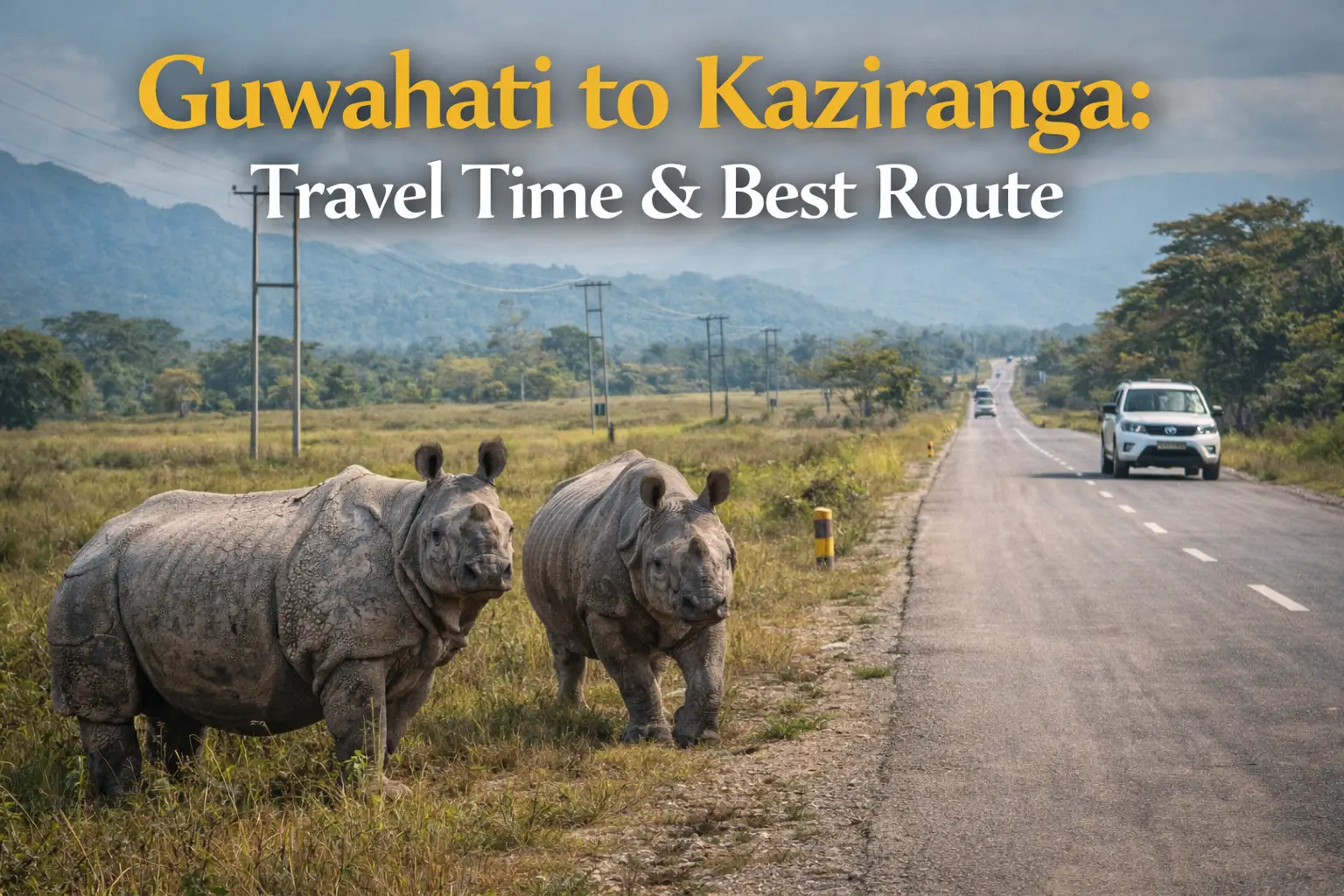
If you’re landing in Guwahati and heading straight to Kaziranga, you’re doing what most wildlife travelers do in Assam: keep it simple, get on the highway, and reach the park in time for a relaxed evening. The good news is that Guwahati to Kaziranga is a comfortable road journey for most of the year. The slightly tricky part is choosing the right route and the right arrival plan so you don’t lose sleep, miss safari timings, or end up staying far from the zone you actually want to visit.
This guide explains the realistic travel time, the best road route, what to expect on the drive, where to stop, and how to reach the correct Kaziranga entry area (Central / Western / Eastern / Burapahar) based on your hotel location.
Quick answer: Guwahati to Kaziranga in one look
- Typical travel time: around 4.5 to 6 hours by road, depending on traffic, breaks, and weather.
- Most-used route: Guwahati → NH27 → Nagaon → Kaliabor → Bokakhat / Kohora (Kaziranga area).
- Best arrival strategy: reach by late afternoon, check in, and plan your first safari the next morning.
- Night driving: not ideal in monsoon or fog season; better to start early morning or midday.
- Where you should stay: near Kohora if you want “classic Kaziranga” safaris; choose carefully if your permit is for a specific range.
- Pro tip: decide your Kaziranga range first, then book your hotel near that gate.
How far is Kaziranga from Guwahati?
Most travelers think of this trip as “a half-day drive,” and that’s a good mental model. The distance varies slightly depending on your exact start point (airport vs city) and where in Kaziranga you’re staying (Kohora, Bagori side, Agoratoli side, or Burapahar side). In real terms, you’re usually looking at roughly 4.5 to 6 hours of driving time.
The biggest reason people take longer than expected is not the highway itself. It’s the combination of:
- Guwahati city traffic if you start late
- slow-moving trucks on some sections
- rain / fog in certain months
- one long tea-and-snack break that becomes two breaks
If you’ve never done an Indian wildlife road transfer before, it helps to read a first-time visitors guide to Indian national parks because timing and “buffer planning” matters for safaris more than people expect.
The best route: Guwahati to Kaziranga by road
For most visitors, the “best route” is simply the most reliable, fastest, and easiest highway drive. That usually means staying on NH27 for the bulk of the journey, then connecting toward Bokakhat/Kohora (the main Kaziranga tourism area).
A simple route description that works in most cases:
Guwahati → NH27 → Nagaon → Kaliabor → Bokakhat / Kohora (Kaziranga)
This route is popular for good reasons: it is straightforward, has plenty of fuel and food options, and keeps navigation stress low. Even if you’re not confident about driving in a new region, this route feels manageable.
Now here’s the part travelers often miss: “Kaziranga” is not one single gate. Where you should exit and where you should stay depends on your safari plan. If you are going for the main experience most people imagine (grasslands, rhinos, and high chances of elephant sightings), Kohora is usually the most convenient base.
To understand the park layout and experiences, it helps to look at an overview like Kaziranga National Park travel and safari guide for planning your stay.
Which Kaziranga area are you going to: Kohora, Bagori, Agoratoli, or Burapahar?
This is the single most practical decision to make before you lock your hotel. Kaziranga is often described by its “ranges” or “zones,” and each one gives a slightly different feel.
Here’s a traveler-friendly way to think about it:
- Central (Kohora) side: easiest base, lots of hotels, good all-round wildlife experience, great for first-time visitors.
- Western (Bagori) side: also very strong for wildlife; sometimes feels less crowded than the central side depending on day and season.
- Eastern (Agoratoli) side: excellent birding and a different landscape feel; can be a longer drive from Kohora, so staying closer helps.
- Burapahar side: more forested; often chosen by travelers who want a quieter feel and different habitat type.
If your safari permit is specifically for a particular range/zone, you’ll want your hotel close to that area. Otherwise, you can waste time in transfers inside the tourism belt before sunrise, which is not fun on a cold morning.
If your wider trip includes more than one Assam park, you may also want to compare Kaziranga with Manas. For that, these two resources make planning easier: Manas Wildlife Sanctuary travel planning guide for visitors and how to reach Manas National Park from major cities.
Realistic travel time by starting point
Not all “Guwahati starts” are equal. Your start point changes your first hour.
- From Guwahati Airport: you may save time if you leave quickly and avoid deep city traffic.
- From central Guwahati hotels: add extra buffer if you’re leaving after breakfast when the city is active.
A practical rule: if you want a smooth drive, start either early morning or late morning. Starting in the middle of peak city traffic can turn a pleasant day into a slightly stressful one, especially if you’re watching the clock for check-in or a planned activity.
If your goal is to be fresh for safari, the simplest plan is:
- Drive Guwahati → Kaziranga during the day
- Arrive before sunset, check in, and relax
- Do your first safari the next morning
That “next morning safari” approach fits most parks across India, not just Kaziranga. If you want to understand how safaris generally work (timings, number of drives, expectations), your evergreen reference is how to plan your first wildlife safari in India step by step.
Where to stop on the way (good break points that actually help)
You don’t need to “plan stops” aggressively on this route, but having one or two sensible break points makes the drive calmer.
A simple and realistic approach:
- First break (optional): around Nagaon area if you want to stretch, grab tea, and reset.
- Main break: Kaliabor / roadside clusters before you turn toward Bokakhat/Kohora (many travelers stop here).
- Final short stop: after you reach the Kaziranga belt, to pick up water/snacks and avoid rushing later.
Two notes that help in real life:
- If you’re traveling in monsoon, keep breaks shorter and aim to reach before evening.
- If you’re with kids or seniors, short breaks every 90–120 minutes keep the mood better than one long break.
Taxi vs self-drive vs bus: what is best for most travelers?
Most wildlife visitors choose a private transfer because it’s the easiest and usually the most comfortable. But each option has a place depending on your travel style.
Private taxi (most convenient)
A private taxi is usually the best option if you want:
- door-to-door comfort
- flexible stops
- no stress about navigation
- arrival exactly at your hotel
If your trip includes multiple wildlife stops (Kaziranga + another park), planning the transfers as a single route often reduces hassle. Many travelers do a short Assam wildlife circuit, and if you’re exploring options, pages like wildlife and culture tours in India for mixed itineraries can be a good reference point for how such trips are structured.
Self-drive (good if you are confident)
Self-drive is great if you are comfortable on Indian highways and want complete independence. Just be honest with yourself about fatigue: arriving tired means you enjoy Kaziranga less.
If you self-drive, avoid planning a “drive + same-day safari” unless it’s an afternoon safari and you have plenty of buffer.
Bus (budget-friendly, less flexible)
Buses can work for budget travelers, but you lose flexibility and sometimes comfort. If you choose a bus, plan your arrival so you still have time to check in calmly and not scramble for logistics late in the evening.
Train or flight options: are they worth it?
This is a common question: “Can I take a train to Kaziranga?” The honest answer is that Kaziranga is primarily a road-transfer destination. There are railheads in the region, but most travelers still end up doing a significant road transfer at the end.
Flights also don’t typically beat the simplicity of a direct Guwahati road transfer unless your Assam plan is unusual (for example, you’re combining multiple locations with limited time).
For most wildlife travelers, Guwahati remains the simplest gateway, and the highway drive remains the simplest transfer.
Best time of day to start from Guwahati
If you want a smooth day with minimal stress, pick one of these two patterns:
- Early start (recommended): leave Guwahati in the morning, arrive mid-afternoon, relax, sleep early.
- Late morning start: leave after breakfast once you’re fully awake, arrive by evening.
Try not to start too late in the afternoon, especially in monsoon. Rain, fog, and reduced visibility can make the final stretch slower than you expect.
If you’re planning your travel season and want to align with the best wildlife months across parks, this is the easiest reference:
best time to visit Indian national parks for wildlife safaris month by month.
What to pack for the drive and arrival day
This is not a long journey, but small things make it feel much easier:
- water and light snacks (especially if traveling with kids)
- power bank and charging cable
- a light jacket (Assam mornings can feel chilly in winter)
- basic motion-sickness tablets if someone is sensitive
- a printed copy of your hotel confirmation and safari permit details
The best part: if you arrive calm and organized, your first safari feels exciting instead of chaotic.
How to plan your first Kaziranga safari after arrival
Kaziranga safari planning is easier when you keep the first day simple. Arrive, check in, eat early, and sleep. Then start fresh for the morning safari.
If this is your first time doing wildlife safaris in India, this reading will save you a lot of second-guessing:
step-by-step guide to planning your first wildlife safari in India.
And if your broader trip includes other big wildlife experiences (tiger parks, birding trips, photography trips), you may want to browse these planning overviews:
- tiger safari tours in India for classic wildlife itineraries
- bird watching tours in India for serious birders
- wildlife photography tours in India for photo-focused travel
Common travel mistakes (and how to avoid them)
The drive itself is easy. The mistakes are usually planning mistakes.
- Trying to do too much on arrival day: drive + safari + late dinner sounds efficient, but it often feels exhausting.
- Booking a hotel far from your safari range: you lose sleep and waste time on early morning transfers.
- Starting too late: night driving in fog or rain is not the “wildlife trip vibe” you want.
- Underestimating winter mornings: the drive is warm, but safari dawns can be cold.
If you avoid just these four mistakes, your Kaziranga experience becomes noticeably smoother.
FAQs (short, practical answers)
How long does it take to travel from Guwahati to Kaziranga?
Most travelers take around 4.5 to 6 hours by road, depending on traffic, weather, and breaks.
Which is the best route from Guwahati to Kaziranga?
The most reliable route for most travelers is via NH27 through Nagaon and Kaliabor, then toward Bokakhat/Kohora.
Is it safe to drive from Guwahati to Kaziranga at night?
It can be done, but it’s not ideal in monsoon or fog season. If you can, travel in daylight and arrive before evening.
Should I stay in Kohora or another area?
If it’s your first Kaziranga trip, Kohora is usually the easiest base. If your safari is in another range (Bagori/Agoratoli/Burapahar), staying closer helps.
Can I do a safari on the same day I arrive from Guwahati?
It’s possible if you arrive early enough for the afternoon slot, but most travelers enjoy the trip more by arriving, resting, and doing the first safari the next morning.
What’s the best season for Kaziranga?
Winter and early spring are popular for comfort and visibility, while the best month depends on what you want to see. Use this as your reference:
best time to visit Indian national parks month by month.
If you want your Kaziranga trip to feel smooth, plan the drive and hotel around your safari range, arrive with buffer time, and keep your first day light. For more practical Assam wildlife planning, browse the Tusk Wildlife blog for India safaris and national parks and the Kaziranga National Park travel guide for safari planning.
